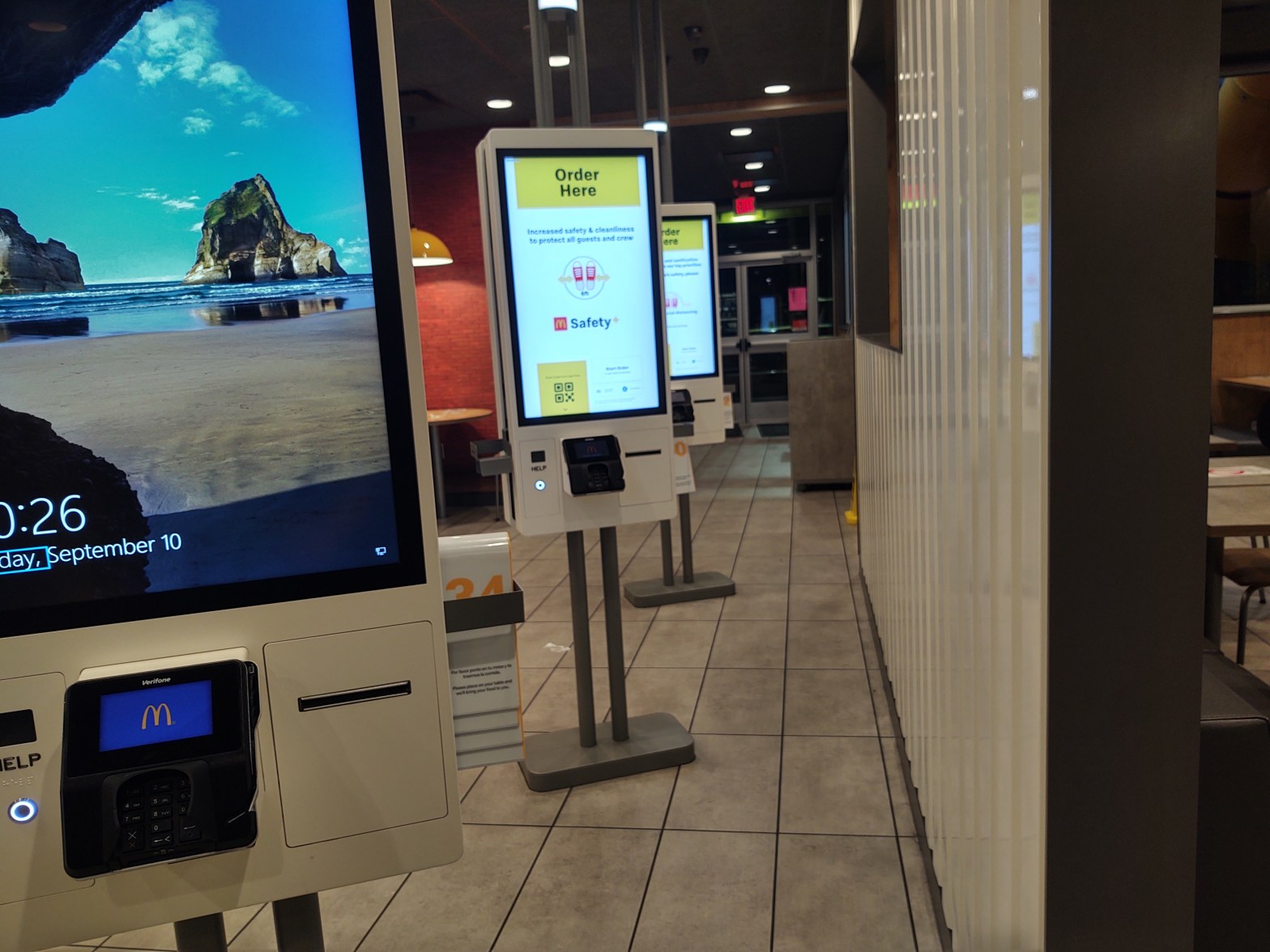
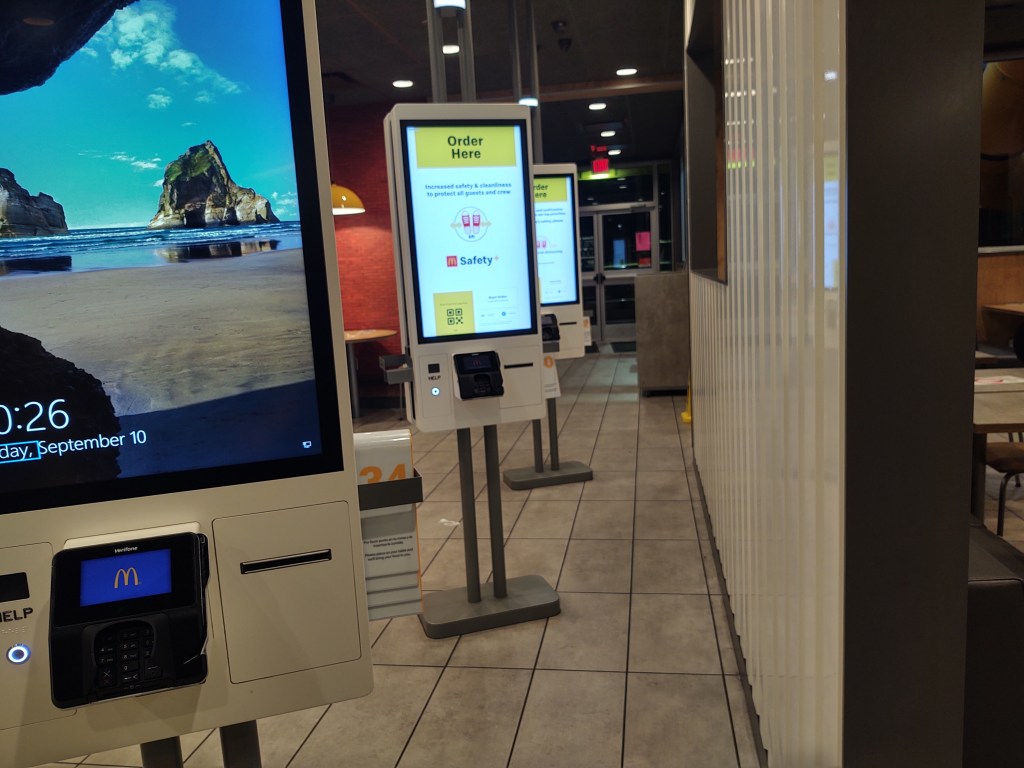
I recently posted a picture of the ordering kiosks at a McDonald’s with the comment, “I bet these guys aren’t making $15 an hour!” A friend responded to my post explaining the difficulty for low-income workers to provide for their families, saying that my post was “clueless and tone deaf.”
It is interesting that he would suggest my post, and by connection me, is “clueless and tone deaf” since it was not that long ago when I was trying to survive on unskilled, entry-level jobs while depending on public assistance so my family of seven could have enough food to eat and healthcare. But I was not offended by my friend’s comments, I can understand where he is coming from. Neither do I question his concern for people, in this case those struggling to make enough money to take care of their families with a low-income job. However, as we care about -and for- the struggling among us, we still need to be practical about how we care for them.
This isn’t about the Church or Christian compassion by the way; the Scripture is clear about how Christians are to care for those in need. This about the government and commerce. Yes, the government has some responsibility to care for its citizens who cannot care for themselves (which it does through public assistance programs), but it also has a responsibility to be a good steward of the taxes you and I pay (so shouldn’t go overboard with public assistance) and should not be overly intrusive into regulating the marketplace. One of the appealing features of a Democratic Republic with Free-Market Capitalism is the ability for individuals and businesses to make their own life and business decisions, attempting to make as much profit as the free market will allow. Grant it, this freedom should not come with the ability to discriminate against legitimate classes or groups of people, but that is not what we are talking about when it comes to a government-mandated minimum wage for unskilled labor (like fast food).
Let me be clear, I care about people. I care about families who struggle to make ends meet. I care about our communities and want them to be a place where people can find jobs and where businesses can thrive (thus providing jobs). But how we care for people and our community must be done wisely and provide the most benefit to everyone involved.
The problem with my friends comment about my post is that he appears to be looking at just one possible solution to the plight of the poor: unskilled jobs like McDonald’s. I contend that this is not the answer or even much help. Fast food jobs are not intended to provide a high enough wage to support a family, they are unskilled, entry-level, jobs designed for teenagers’ first employment or others who just want a little extra cash. “Unskilled” is the key word here. Flipping burgers and taking orders is not skilled labor, it’s barely worth the $3.10 I made when I worked at McDonald’s 40 years ago much less the $15-20 being proposed as a minimum wage today. To enforce a minimum wage for unskilled entry-level jobs is little more than creating another avenue to dispense welfare, but making businesses foot the bill.
Some fast food restaurants have already shown how they can more cheaply take orders, with fewer personnel problems and no training: the ordering kiosks and apps. While there is an initial investment in the technology, it will not take long to recoup with the savings from not having to pay employees, even at the current minimum wage. Should the minimum wage go up, fast food restaurants will likely more widely employ technology to eliminate personnel costs, with more ordering kiosks as well as automating the cooking and packaging of orders. Having worked the grill at McDonald’s I can assure you it would not be very hard to do.
While many business owners and employers are very compassionate and go to extremes to care for their employees, businesses are in business to make money, not provide for the needs of their workers (not getting into the benefit to the employer of the high morale of employees). If they can provide the product or service they are in business for without the expense of employees, thus creating more profit, they will more than likely do it, which will reduce the number of unskilled, entry-level jobs teenagers can enter the workforce through while preserving the businesses’ bottom line…and not giving new workers (teenagers) any work experience (with all that comes with that).
The government really has no business involving itself so deeply into the operation of private businesses, with few exceptions (like safety and discrimination). But the wage a business pays all of its employees (without discriminating) does not fall under what should be required federal regulation, at least for restaurants. As much as I enjoy eating out sometimes, food service is not an essential industry like healthcare, utilities or the military, so the government has even less reason to get involved. They should allow the market to drive the wage like it is now during COVID. There are so few workers willing or able to work that fast food restaurants are competing for such a small pool of workers that they are raising their starting pay and providing additional benefits, without government insistence. This is how it should work.
If the government really wants to help low-income wage earners, they should assist low-end skilled labor employers to provide training for people to enter the skilled workforce where the market already determines a higher wage than unskilled entry-level jobs. In the meantime, wage earners forced into unskilled low income jobs who have a family to support can receive government assistance for healthcare, food and other essential expenses as an “underemployed” worker, which will help them get through what should be a short period in a low wage job, working toward a higher paying job that requires a skill, intended for wage earners supporting a family.
Obviously there are bigger problems to deal with than the minimum wage in order take care of people, and this problem can’t be fixed overnight or by legislators just looking to push their own agenda. But the answer is not to try to fix something that isn’t broken to make it do something it’s not intended to do or able to sustain.
Here’s the bottom line: unskilled entry-level jobs (like fast food) are not intended to provide a family-care wage and to artificially inflate the value of unskilled labor with a high minimum wage would ultimately hurt the ones a higher minimum wage was intended help.
 densford4democracy.com